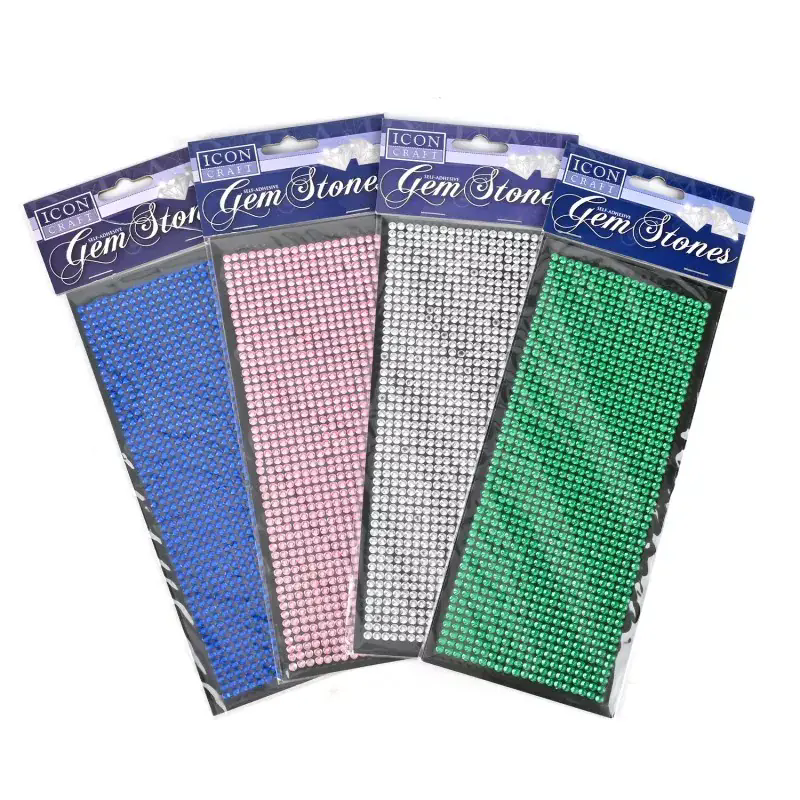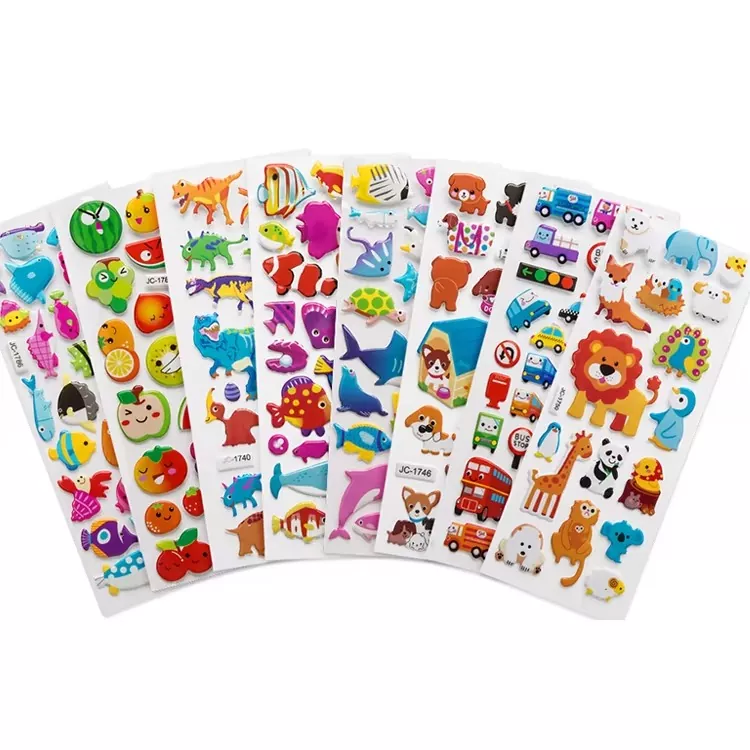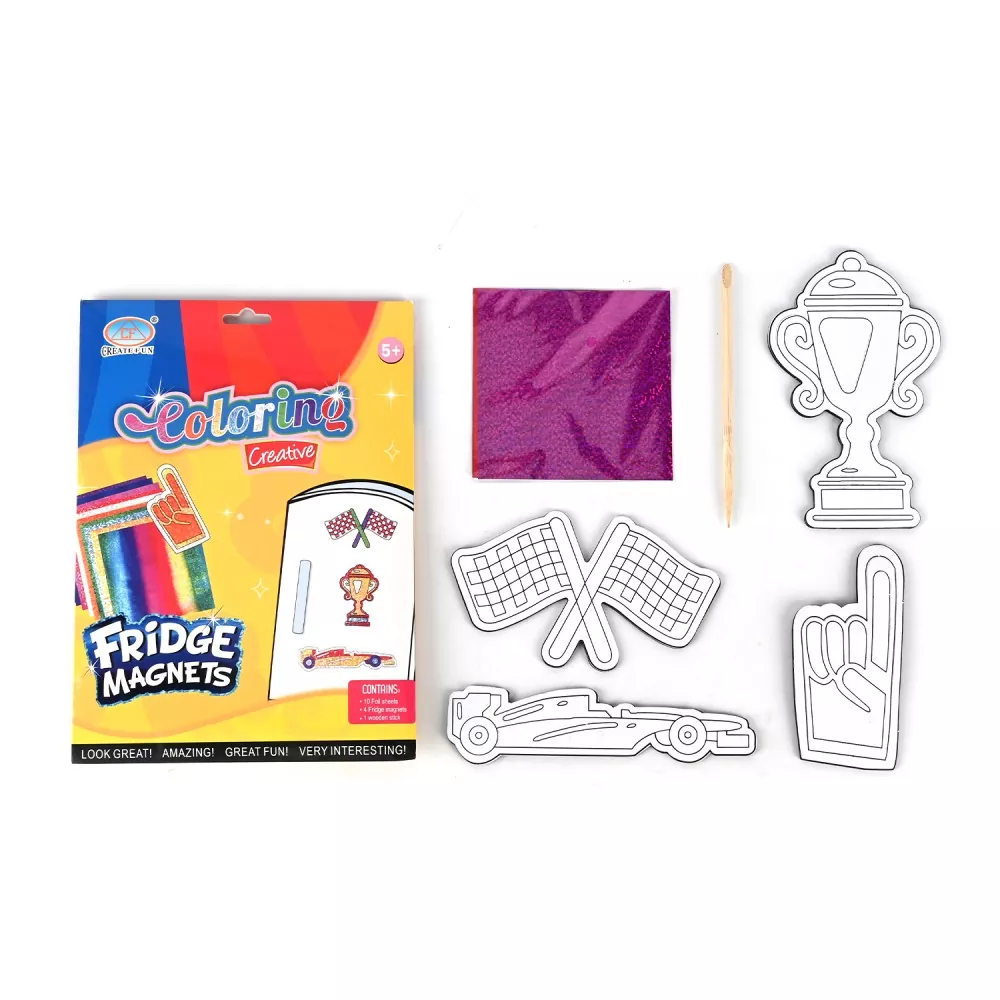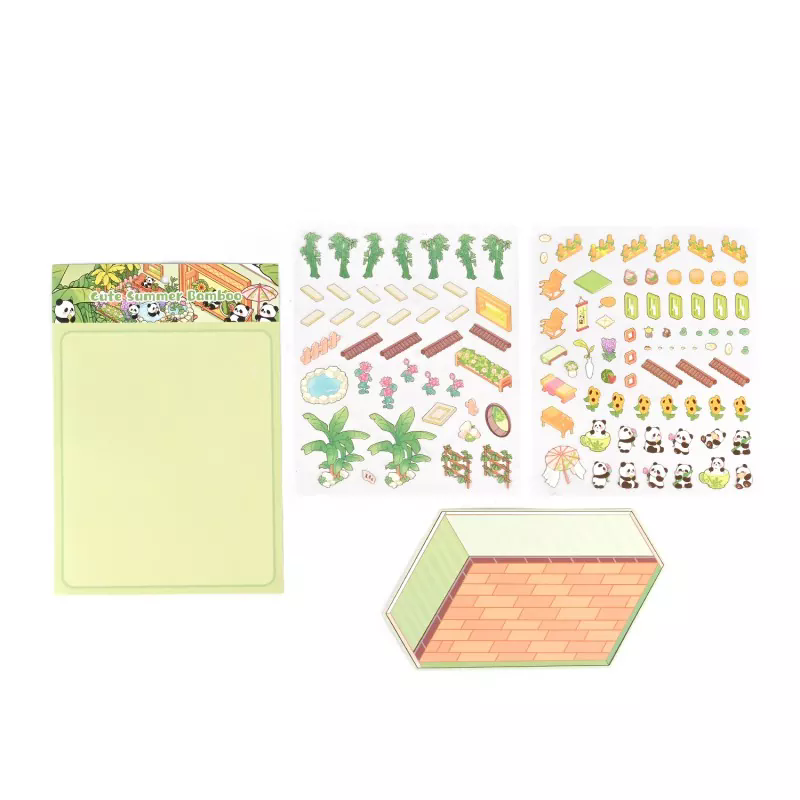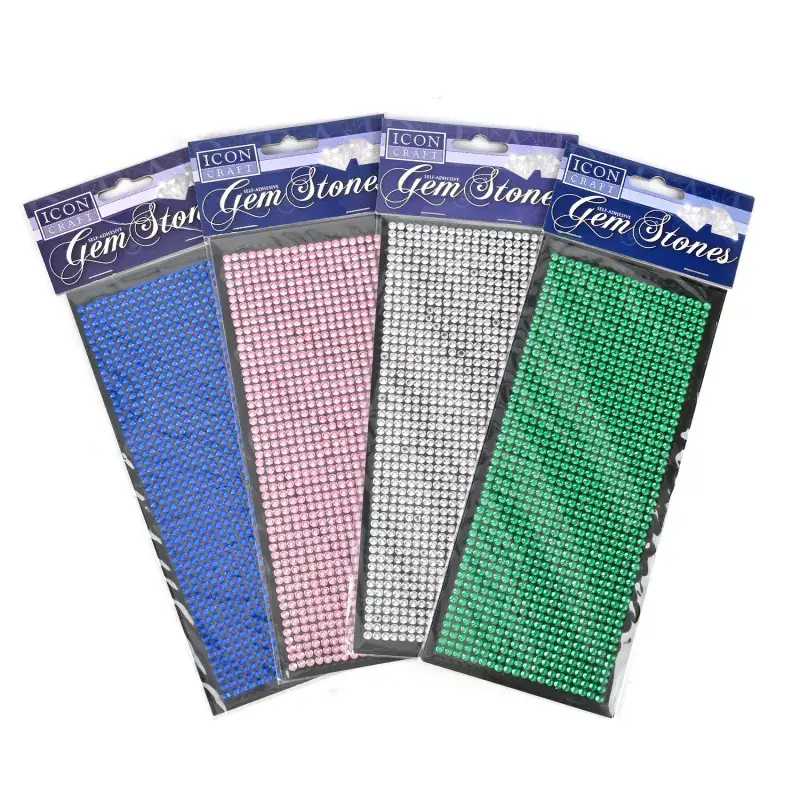
A children's craft kit arrives at a retail distribution center. The box contains sheets of Gem Stickers that are supposed to adhere to paper, cardboard, and plastic. A sample is pulled from the carton and tested by hand: the backing peels away easily, the sticker is pressed onto a card, and it holds. But within hours, the sticker begins to lift at the edges. By the next day, it has fallen off entirely. The adhesive was not strong enough to hold the gem's weight, or the backing was not formulated to release cleanly, or the press test was not performed at all. This is a common quality failure in the gem sticker category, and it is entirely preventable. Press testing is the process that simulates the conditions of use—the pressure of application, the dwell time, the temperature, and the surface—to verify that the sticker will perform as intended. For buyers sourcing Gem Stickers for craft kits, party favors, or retail packaging, press testing is the difference between a product that delights and a product that generates complaints.
This guide is written for buyers who need to understand why press testing matters for gem sticker quality. We will explain what press testing is, the specific quality attributes it measures, the test methods and acceptance criteria, the environmental factors that affect adhesion, and the criteria for evaluating a supplier's testing capability. We will also provide detailed product parameters from our factory at Wenzhou Create Fun Craft Co., Ltd. Whether you are sourcing Gem Stickers for a craft brand, a stationery retailer, or a promotional campaign, this guide will help you specify a product that adheres reliably and meets your customers' expectations.
Press testing is a quality control procedure that simulates the application of a sticker to a surface under controlled conditions of pressure, time, and temperature. The purpose is to verify that the adhesive will bond securely to the intended surface and that the sticker will remain in place under normal use. For Gem Stickers, press testing is particularly important because the sticker carries a three-dimensional gem that adds weight and creates a lever effect at the edges. A flat paper sticker can tolerate a weaker adhesive; a gem sticker cannot. The gem's weight pulls on the adhesive, and any weakness in the bond will cause the sticker to lift or fall off. Press testing identifies these weaknesses before the product reaches the customer.
The press test is not a single measurement. It is a sequence of evaluations that covers the initial tack, the peel strength, the shear strength, and the durability under environmental stress. Each of these attributes corresponds to a different failure mode. Initial tack determines whether the sticker will stick at all. Peel strength determines whether it will resist lifting at the edges. Shear strength determines whether it will slide under the gem's weight. Environmental durability determines whether it will survive heat, cold, and humidity. The table below summarizes these attributes and their failure modes.
| Attribute | What It Measures | Failure Mode if Inadequate |
| Initial Tack | Ability to bond on contact | Sticker does not stick |
| Peel Strength | Resistance to lifting at edges | Edges curl and lift |
| Shear Strength | Resistance to sliding under load | Sticker slides or falls off |
| Environmental Durability | Performance under heat, cold, humidity | Adhesive degrades over time |
| Backing Release | Ease of peeling from backing | Sticker tears or backing sticks |
At Wenzhou Create Fun Craft Co., Ltd., our factory performs press testing on every production batch of Gem Stickers. We test the initial tack, peel strength, shear strength, and environmental durability against our acceptance criteria. Our quality control team records the results and retains samples for traceability. Our goal is to ensure that every Gem Sticker we ship will adhere reliably to the intended surface.
Press testing for Gem Stickers measures several quality attributes that together determine whether the product will perform in use. The most important are initial tack, peel strength, shear strength, and backing release. Initial tack is the ability of the adhesive to bond on contact, without the need for prolonged pressure or dwell time. A gem sticker with low initial tack may not stick when a child presses it onto a card, leading to immediate frustration. Peel strength is the force required to peel the sticker from the surface at a specified angle and speed. A gem sticker with low peel strength will lift at the edges under the gem's weight. Shear strength is the resistance to sliding under a constant load. A gem sticker with low shear strength will slide down a vertical surface. Backing release is the force required to peel the sticker from its backing paper. A backing that is too tight will cause the sticker to tear; a backing that is too loose will allow the sticker to fall off the sheet before use. The table below summarizes these attributes and their test methods.
| Attribute | Test Method | Typical Acceptance Criterion |
| Initial Tack | Loop tack test | > 8 N/25mm |
| Peel Strength | 180-degree peel test | > 6 N/25mm |
| Shear Strength | Static shear test at 1 kg | > 24 hours without failure |
| Backing Release | Peel from backing at 90 degrees | 0.1 - 0.5 N/25mm |
| Environmental Durability | Accelerated aging at 40°C/80% RH | No lifting after 72 hours |
At our factory, we use calibrated testing equipment to measure these attributes on every batch of Gem Stickers. We record the results in a batch test report that accompanies each shipment. If any batch fails to meet the acceptance criteria, it is held for rework or rejection. Our goal is to provide our customers with Gem Stickers that meet the specified performance standards.
Temperature and humidity are the most common environmental factors that affect gem sticker adhesion. At high temperatures, the adhesive softens and loses shear strength, causing the sticker to slide or fall off. At low temperatures, the adhesive becomes brittle and loses tack, causing the sticker to fail on contact. High humidity can cause the adhesive to absorb moisture, which reduces its bond strength and can lead to mold or discoloration. The press test must simulate the conditions that the sticker will encounter in storage, transport, and use. The table below summarizes the effect of temperature and humidity on gem sticker adhesion.
| Condition | Effect on Adhesive | Test Condition |
| High Temperature (40°C+) | Softening, loss of shear strength | Accelerated aging at 40°C |
| Low Temperature (0°C-) | Brittleness, loss of tack | Cold storage test at -10°C |
| High Humidity (80%+) | Moisture absorption, bond degradation | Humidity chamber at 80% RH |
| Cyclic Conditions | Repeated expansion and contraction | Thermal cycling test |
At Wenzhou Create Fun Craft Co., Ltd., our factory tests our Gem Stickers under accelerated environmental conditions to verify their durability. We use a humidity chamber and a temperature-controlled oven to simulate the conditions that the stickers may encounter during transport and storage. Our acceptance criteria require that the stickers show no lifting or failure after 72 hours of exposure to 40°C and 80% relative humidity. Our goal is to ensure that our Gem Stickers perform reliably in a range of climates.
When specifying press testing for Gem Stickers, buyers should define the test methods and acceptance criteria in the purchase order. The test methods should be based on recognized standards, such as ASTM D3330 for peel adhesion, ASTM D3654 for shear adhesion, and ASTM D2979 for probe tack. The acceptance criteria should be appropriate for the specific product and the intended use. For gem stickers that will be used by children, the criteria should be stringent enough to ensure that the sticker will not detach and become a choking hazard. The table below provides a sample specification for press testing.
| Test | Standard | Acceptance Criterion |
| Initial Tack | ASTM D2979 | > 8 N/25mm |
| Peel Adhesion | ASTM D3330 | > 6 N/25mm |
| Shear Adhesion | ASTM D3654 | > 24 hours at 1 kg |
| Environmental Aging | Internal method | No lifting after 72h at 40°C/80% RH |
| Backing Release | ASTM D3330 (modified) | 0.1 - 0.5 N/25mm |
At our factory, we work with our customers to define the press testing specification for their Gem Stickers. We can test to the standards listed above or to customer-specific methods. We provide a batch test report with every shipment, documenting the results for each attribute. Our goal is to ensure that the product meets the customer's performance requirements and regulatory obligations.
Evaluating a supplier's testing capability is essential for ensuring that the Gem Stickers you source have been properly press tested. The supplier must have the equipment to perform the tests, the trained personnel to interpret the results, and the documentation system to record and retain the data. The table below summarizes the evaluation criteria.
| Evaluation Criterion | What to Look For | Why It Matters |
| Testing Equipment | Peel tester, shear tester, tack tester, humidity chamber | Enables accurate measurement |
| Trained Personnel | Quality technicians with testing training | Ensures correct test execution |
| Documentation | Batch test reports, traceability records | Provides evidence of testing |
| Standards Compliance | Testing to ASTM or equivalent standards | Ensures comparability and reliability |
| Corrective Action | Procedure for handling failed batches | Ensures defective product is not shipped |
At Wenzhou Create Fun Craft Co., Ltd., our factory has a dedicated quality control laboratory equipped with peel testers, shear testers, tack testers, and a humidity chamber. Our technicians are trained in the test methods and the interpretation of results. We maintain batch test reports for every shipment and retain samples for traceability. We invite you to evaluate us against these criteria and to consider us as your partner for Gem Stickers.
The following table provides the key product parameters for our Gem Stickers. These stickers are designed for craft kits, party favors, retail packaging, and promotional applications. Our factory can also produce custom stickers to meet specific requirements.
| Parameter | Specification Range | Notes |
| Sticker Size | 5mm - 50mm | Custom sizes available |
| Gem Material | Acrylic, resin, glass | Selected for appearance and durability |
| Adhesive Type | Permanent acrylic, removable acrylic | Selected for application |
| Initial Tack | > 8 N/25mm | Verified by press testing |
| Peel Strength | > 6 N/25mm | Verified by press testing |
| Shear Strength | > 24 hours at 1 kg | Verified by press testing |
| Environmental Durability | No lifting after 72h at 40°C/80% RH | Verified by accelerated aging |
| Backing Material | PET film, glassine paper | Selected for release performance |
| MOQ | 1,000 sheets | Negotiable for large orders |
| Lead Time | 2 - 4 weeks | Depends on quantity and customization |
At our factory, we manufacture our Gem Stickers to meet these specifications and more. We can customize the size, gem material, adhesive type, and backing to suit your specific requirements. Our quality control system includes inspection of raw materials, in-process inspection, press testing, and final inspection before shipment. Our goal is to provide our customers with high-quality Gem Stickers that meet their performance requirements.
Question 1: What is press testing and why is it important for gem stickers?
Answer: Press testing is a quality control procedure that simulates the application of a sticker to a surface under controlled conditions of pressure, time, and temperature. It is important for Gem Stickers because the gem adds weight and creates a lever effect at the edges, which can cause the sticker to lift or fall off if the adhesive is not strong enough. Press testing verifies that the adhesive will bond securely and remain in place under normal use.
Question 2: What happens if a gem sticker is not press tested?
Answer: If a Gem Sticker is not press tested, there is a risk that the adhesive is too weak, the backing release is incorrect, or the environmental durability is inadequate. The sticker may fail to stick, lift at the edges, slide under the gem's weight, or degrade over time. These failures lead to customer complaints, returns, and damage to the brand's reputation. Press testing identifies these issues before the product reaches the market.
Question 3: How does temperature affect gem sticker adhesion?
Answer: At high temperatures, the adhesive softens and loses shear strength, causing the sticker to slide or fall off. At low temperatures, the adhesive becomes brittle and loses tack, causing the sticker to fail on contact. The press test should include accelerated aging at elevated temperature to verify that the sticker will perform in warm climates and during transport. Our factory tests our Gem Stickers at 40°C and 80% relative humidity for 72 hours.
Question 4: What is the difference between initial tack and peel strength?
Answer: Initial tack is the ability of the adhesive to bond on contact, without the need for prolonged pressure or dwell time. Peel strength is the force required to peel the sticker from the surface after it has bonded. Both are important: a sticker with good peel strength but poor initial tack may not stick when first applied, while a sticker with good initial tack but poor peel strength may lift at the edges after a short time.
Question 5: How do I know if my supplier is performing press testing on gem stickers?
Answer: Ask the supplier for a batch test report that documents the results of the press testing for each attribute. The report should include the test method, the acceptance criteria, and the measured values. A reputable supplier will be able to provide this documentation and will have a quality control laboratory equipped for the tests. At Wenzhou Create Fun Craft Co., Ltd., we provide a batch test report with every shipment of Gem Stickers.
Press testing is essential for checking the quality of Gem Stickers because it verifies the adhesion attributes that determine whether the sticker will perform in use. The gem's weight and lever effect make adhesion more critical than for flat stickers, and press testing ensures that the adhesive, backing, and environmental durability meet the required standards. By specifying the test methods and acceptance criteria, buyers can ensure that the Gem Stickers they source will adhere reliably and meet their customers' expectations. At Wenzhou Create Fun Craft Co., Ltd., our factory performs press testing on every batch of Gem Stickers and provides batch test reports with every shipment. We have the equipment, the trained personnel, and the documentation system to support our customers' quality requirements.
Whether you are sourcing Gem Stickers for a craft brand, a stationery retailer, or a promotional campaign, we invite you to contact us to discuss your requirements. We can provide samples, test data, and customized solutions. Our commitment to quality and customer satisfaction has made us a trusted partner for businesses around the world.
Contact Wenzhou Create Fun Craft Co., Ltd. today to discuss your Gem Sticker requirements and discover how our press testing can ensure the quality of your product.